What is the actual size of the gaming market that has captured the imagination of today’s youth?
According to global data from 2025, it stands at a staggering $385 billion USD. That number alone is enough to make anyone stop and think. The undisputed heavy hitter in this arena is China. Most of the mobile games topping the charts in major markets like the United States, Japan, and South Korea were built by Chinese developers.
Today, Chengdu, located in China’s Sichuan province, has made a global name for itself through gaming; it is widely celebrated as the capital of the Chinese gaming industry. In this feature, I will explore the economic power of Chinese gaming, alongside ongoing efforts to blend culture and education through virtual worlds.
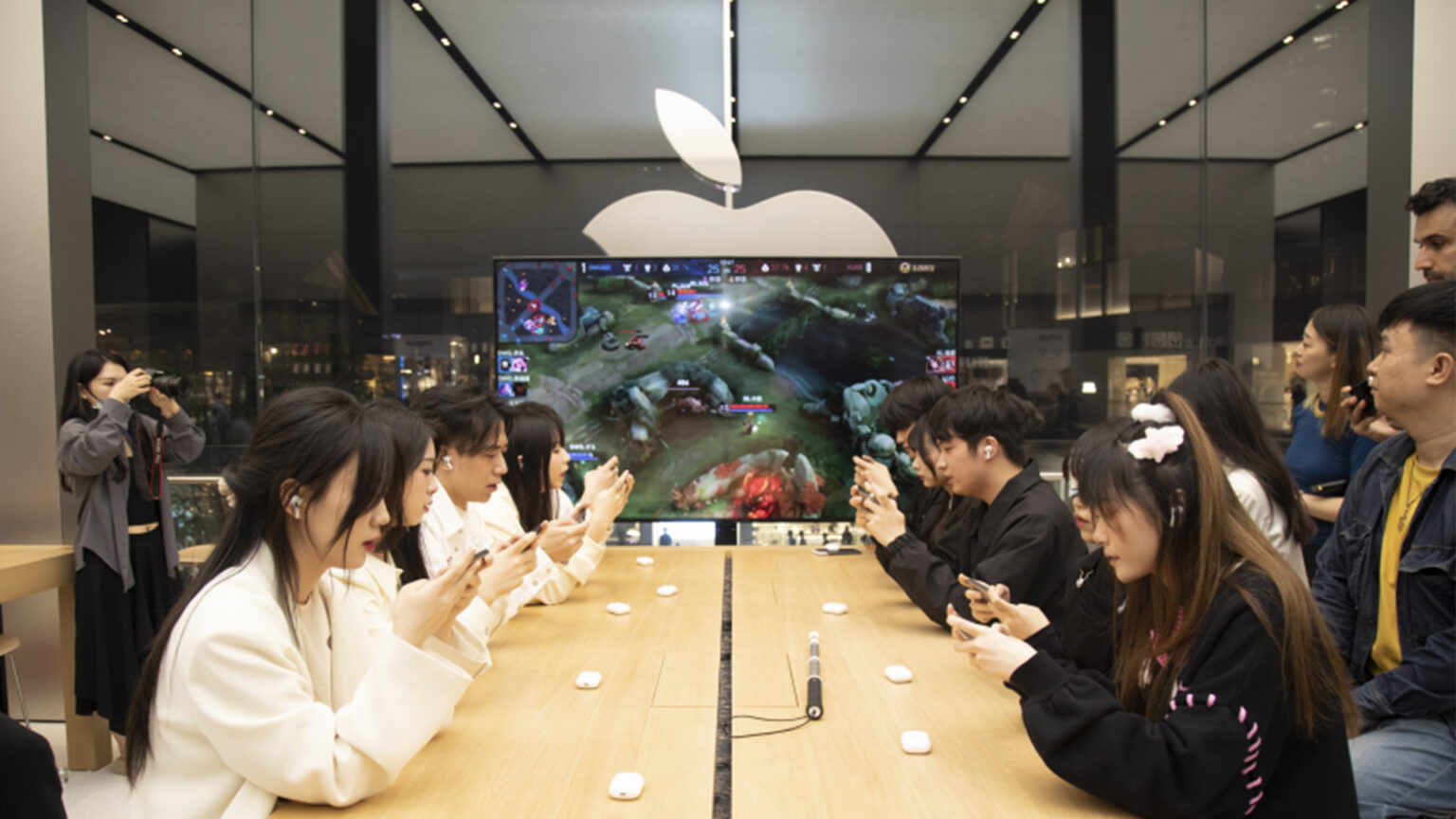 A Massive Population, A Massive Market With its vast population, China is naturally the world’s largest gaming market. China alone boasts 680 million active gamers, a number larger than the entire population of the European Union or the United States. As vast as the market is, China’s grip on the gaming sector is equally powerful.
On the corporate front, Tencent leads as the largest gaming enterprise on earth, pulling in $35 billion USD annually from gaming alone. NetEase is another giant that is not only driving the international expansion of the Chinese gaming economy, but also exporting Chinese culture at a rapid pace. These Chinese giants continue to ramp up investments in top gaming studios across the globe.
Mobile gaming commands the largest slice of the pie, a massive 45 percent of total gaming revenue, with console and PC gaming sharing the rest. The broader gaming industry also brings together mobile gaming, animation, and esports.
One out of every five dollars spent on gaming globally is centered in China. China’s domestic market alone has passed $50 billion USD annually; after hitting $51.8 billion USD in 2025, it is projected to top $54 billion USD by the end of 2026.
How Gaming Can Connect Nepal
“Why China and Nepal? Why now?”
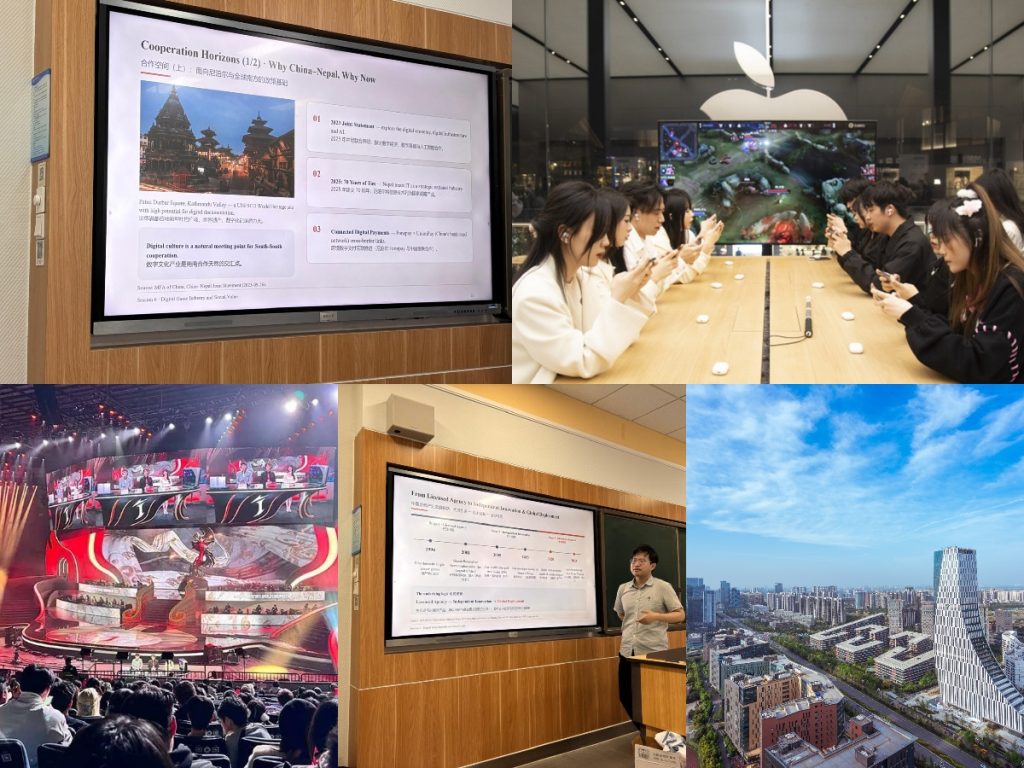
Associate Professor Gan Haochen from the University of Electronic Science and Technology of China posed this question while showing a photograph of Patan Durbar Square. His point was all about blending cutting-edge technology with rich storytelling.
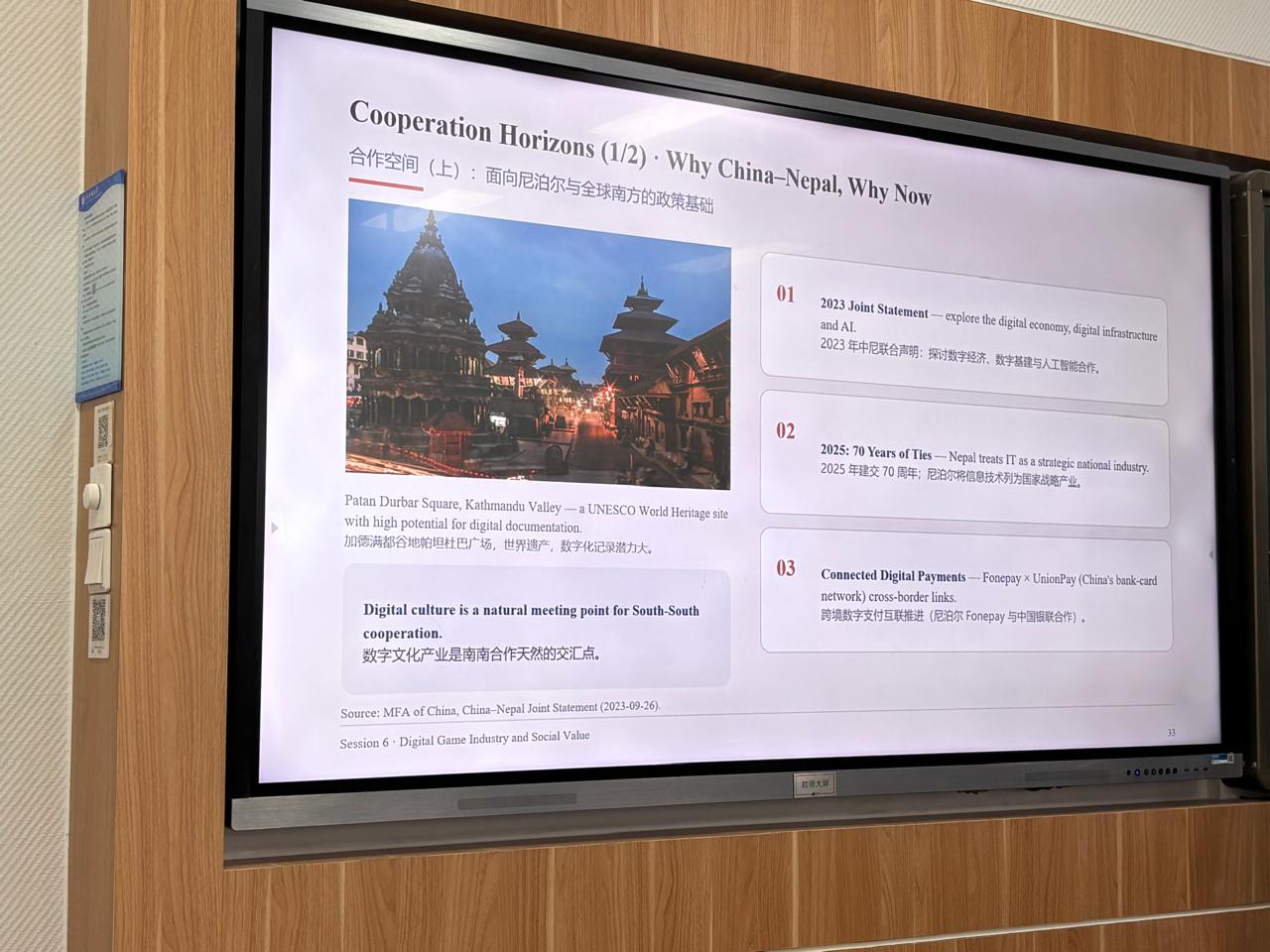 A joint statement released by Nepal and China in 2023 highlighted exploring potential cooperation in the digital economy, infrastructure, and artificial intelligence. As of 2025, diplomatic ties between Nepal and China mark 70 full years. Cross-border digital payments have also taken shape through platforms like Fonepay and UnionPay.
Connecting these milestones, Professor Haochen noted: “Games can be created by pairing Chinese technology with Nepali storytelling.”
His insight shows that expanding the gaming market isn’t just about economic momentum; it also spreads cultural identity. To share that identity with the world, a country doesn’t need immense wealth, having a great story is enough. Though game development in Nepal is still in its infancy, the gamer community is solid. Nepali players regularly step onto the international esports stage. Domestically, structured efforts—like those led by Viktor Paudel’s team, are running boot camps to groom players for professional competition.
According to Professor Haochen, Nepal and China can be linked not just through players, but through the games themselves. On that basis, he remarked: “Digital culture serves as a natural bridge uniting China with South Asia.”
Convergence with AI, Virtual Reality, and Micro-Dramas
Just as Beijing and Shenzhen are known as global hubs for corporate finance and tech, Chengdu has carved out its own unique identity in gaming. Chengdu ranks at the top in China for esports research and development (R&D). At one point, Chengdu alone was home to over a thousand active gaming and animation companies. As the virtual market matured, about half survived.
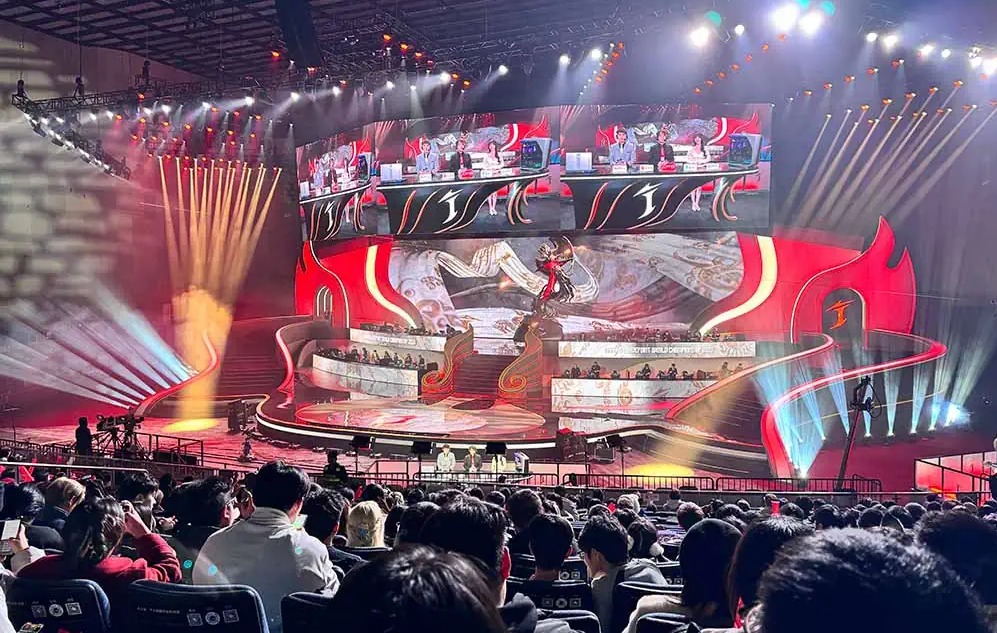 The massive hit Honor of Kings was created right in Chengdu by Tencent’s TiMi Studio. The city wears the game as a badge of honor, as it has driven both local gaming culture and economic growth. Chengdu accounts for 20 percent of China’s total output in mobile game R&D and outsourcing. Supported by an ultra-high-definition industrial base, the capital of Sichuan stands out as a premier esports hub. Beyond traditional entertainment, the gaming industry is converging with media like AI, Virtual Reality (VR), and micro-dramas, creatively bridging culture and technology.
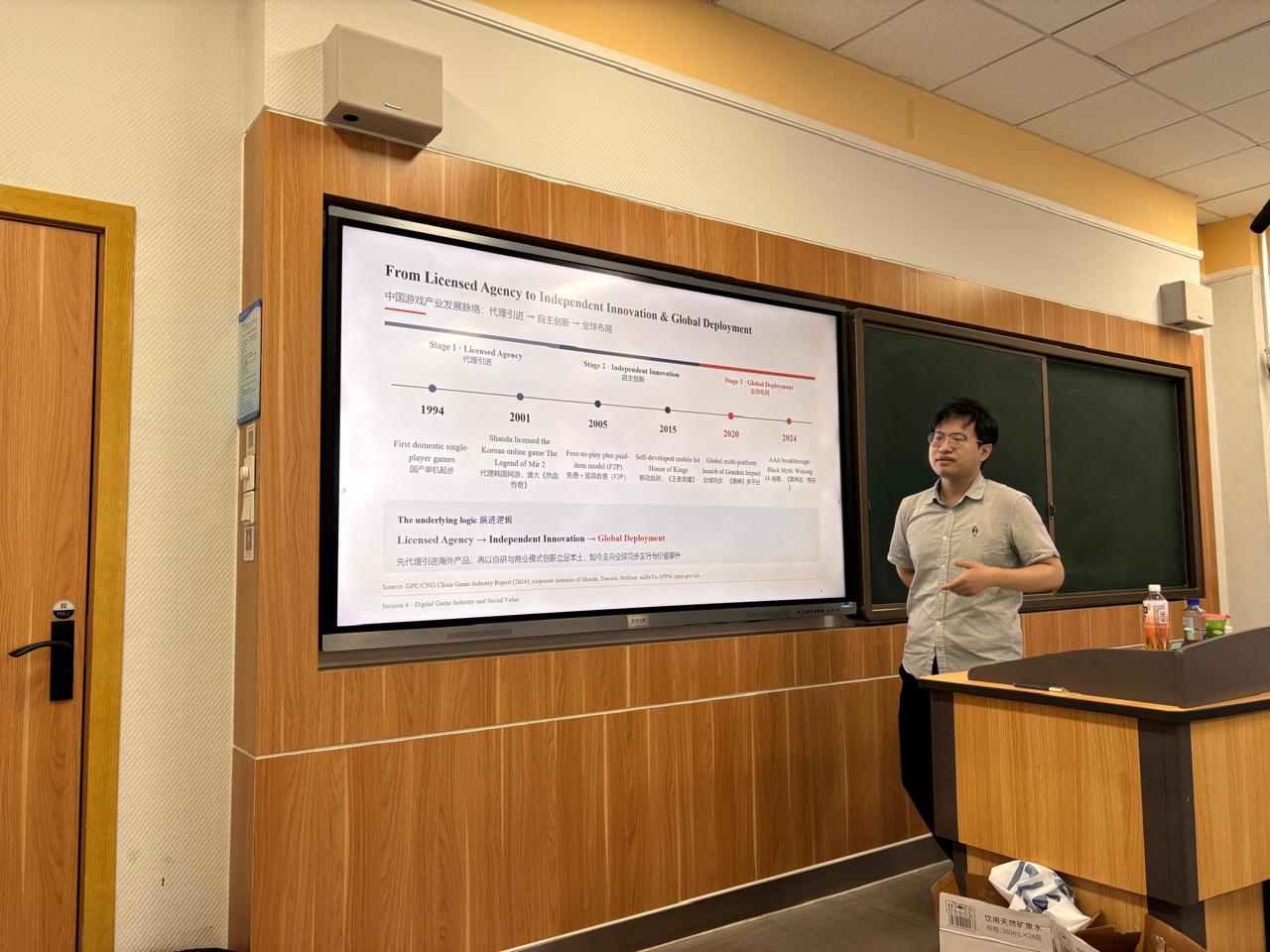
As China opened its economy, foreign games began making an impact as early as 1994. Up until 2000, single-player games dominated the landscape. From 2001 to 2010, China moved forward by licensing foreign titles. Starting with licensed titles like the Korean hit The Legend of Mir 2, China eventually began developing its own free-to-play games. This phase introduced in-game marketplaces where players could purchase virtual items.
The third wave started around 2015, when China began building games using its own technology. Blockbusters like Honor of Kings, Genshin Impact, and Black Myth: Wukong went on to achieve global acclaim. The explosion of mobile gaming played a key role in this rise.
Furthermore, China officially recognized esports as a formal sport in 2018.
Does Gaming Harm or Help?
In 2020, Genshin Impact created such a huge footprint that regulators stepped in, limiting minors to just three hours of gameplay per week. Meanwhile, Black Myth: Wukong blew past 10 million sales within just four days of release. Phenomenon like these sparked global debates around virtual games. Around the world, a common worry persists about digital games, that they do more harm than good.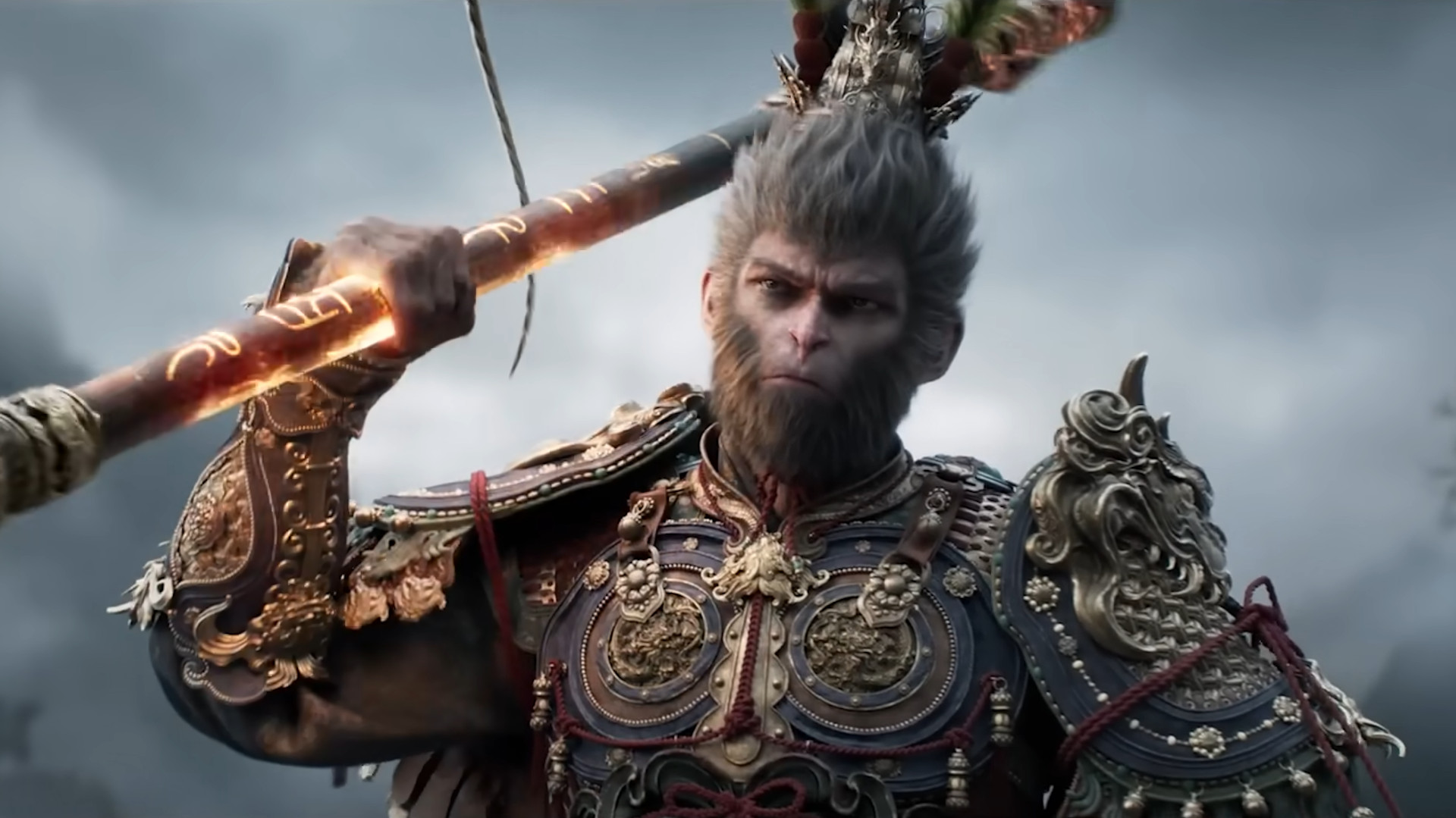
China, however, has thought deeply about how to make gaming productive. By weaving culture, education, and social values directly into gameplay, it has prioritized constructive content. Expanding on recent studies, Professor Haochen noted: “Game-based learning and digital open worlds should be used to understand economic and social behaviors.”
How Can This Work in Practice?
At Chinese universities, significant research is going into how gaming can be integrated into modern teaching methods. As an example of game-based learning, Professor Haochen pointed to Minecraft Education. Minecraft is an open-world block-building game. Within the educational version, players are tasked with challenges like rebuilding ancient Chinese palaces or heritage sites.
 Gamers learn complex physics principles through hands-on play. The game offers a fresh way to grasp history, math, science, and computer coding. Students stepping beyond standard textbooks can gain practical, applied knowledge through gameplay.
Another example he shared was Discovery Tours. Here, players explore digital representations of ancient civilizations. As they play, they absorb knowledge effortlessly. The geography, social life, art, and architecture of ancient cities are experienced firsthand, turning the game into a tool for learning history and culture.
While these titles are purely educational, games like Grand Theft Auto (GTA) are widely criticized for their violent themes. Yet for university researchers, GTA serves as a laboratory for virtual societies. Inside GTA’s open world lies a virtual city complete with traffic laws, economic systems, criminal dynamics, and human interaction.
Chinese researchers view such games as simulated case studies of human behavior. How do people trade in a virtual environment? How do supply and demand dynamics play out? How does human behavior shift when rules are strict versus absent? By studying interactions inside game environments, researchers can identify solutions to real-world social dynamics.
These analytical frameworks can also apply to Nepal. For instance, what does the frustration expressed during a match of PUBG reveal? The language players use can offer insights into their social mindsets, economic perspectives, or political views.
 Nepal has a huge audience following esports competitors and virtual events. Understanding how this crowd is influenced by the language used in games, and finding ways to address that behavior, can start through gaming itself.
Ultimately, whether a game harms or helps depends entirely on how it is used. China, which is connecting with the world through digital gaming, continues to promote tourism and showcase its cultural heritage globally. As Professor Haochen summarized: “We have the technology and skills; you have the culture and stories. If we bring the two together, we can create an entirely new realm of digital gaming.”